In Hialeah, where construction must confront the demanding South Florida terrain, foundations serve as more than just a building's base—they form the vital connection between the structure and the ground. The local subsurface conditions, characterized by high groundwater levels, porous limestone bedrock, and expansive organic soils prone to movement and dissolution, pose significant challenges. Whether for a residence, a condominium, or a commercial facility, picking the correct foundation system is crucial for the structure's durability, safety, and eligibility for insurance. A poorly designed foundation in Hialeah risks differential settlement, wall cracks, and even total structural collapse, underscoring the need for expert geotechnical advice from the initial planning stages.
The Biscayne Aquifer, a major shallow groundwater source in the U.S., lies beneath Hialeah, often only a few feet below the surface. This high water table, together with the Miami Limestone—a soft, vuggy carbonate rock susceptible to dissolution and sinkholes—creates a subsurface that requires specialized foundation approaches. Additionally, organic peat layers and loose sands, leftovers from the historic Everglades that once covered much of Miami-Dade County, are widespread. These materials have low bearing capacity and high compressibility, making conventional shallow foundations unsuitable in many spots unless ground improvement is performed first. A thorough grasp of this local geology is essential for any successful foundation design in Hialeah.
All foundation work in Hialeah must adhere to the Florida Building Code (FBC), including local amendments tailored to Miami-Dade County's High Velocity Hurricane Zone (HVHZ). FBC Chapter 18 covers soils and foundations, mandating site-specific geotechnical studies for most commercial and multi-family developments. Furthermore, Miami-Dade County enforces strict wind-load provisions that affect foundation uplift resistance. Environmental regulations from the South Florida Water Management District (SFWMD) and the Miami-Dade Department of Environmental Resources Management (DERM) can also influence design, especially concerning dewatering and aquifer contamination risks. Permitting through the City of Hialeah Building Department adds further scrutiny, requiring engineers to show that proposed foundations satisfy both structural and environmental criteria.
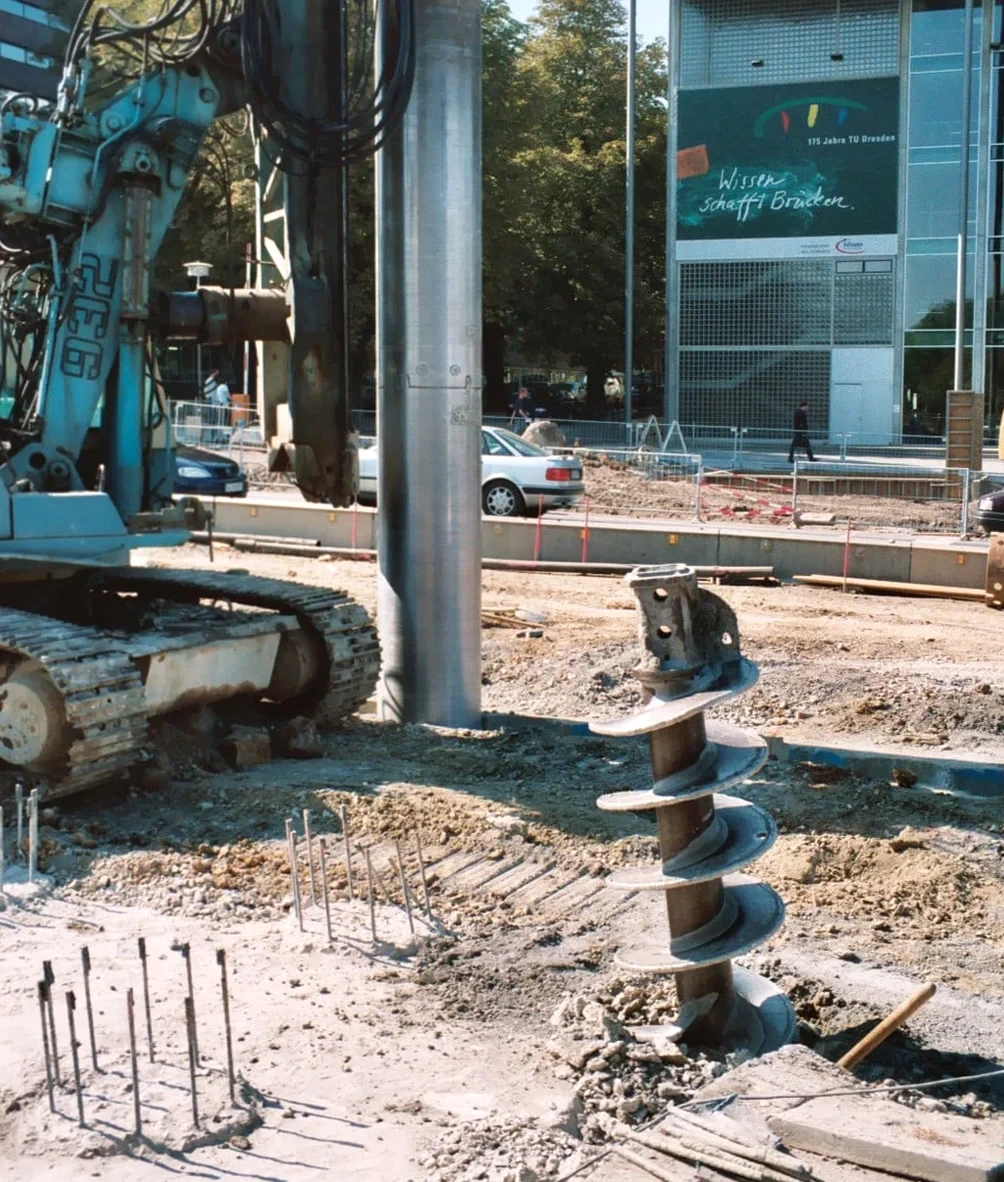
The types of projects requiring engineered foundations in Hialeah span the full spectrum of construction. Residential developments — from custom homes to large tract housing — often rely on raft or mat foundation design when soil conditions are too weak for isolated footings, distributing structural loads across a continuous slab that floats over problematic strata. For smaller structures or additions where competent limestone is within reach, shallow foundation design using reinforced concrete footings may offer a cost-effective alternative, provided bearing capacity and settlement analyses confirm adequacy. Mid-rise and high-rise buildings almost universally require deep foundations — driven piles or drilled shafts that bypass weak surficial soils to bear on deeper, more competent limestone layers. Industrial facilities, retaining walls, and infrastructure projects like pump stations and water tanks all demand foundation systems tailored to Hialeah’s specific subsurface conditions, often integrating waterproofing and corrosion protection due to the aggressive groundwater chemistry.
Frequently asked questions
What is the most common foundation type used in Hialeah and why?
Reinforced concrete footings, as shallow foundations, are common for single-family homes where competent limestone is near the surface. However, larger structures often need mat foundations or deep piles due to high water tables and weak organic soils. The selection depends entirely on site-specific geotechnical conditions, with many Hialeah projects requiring ground improvement before any foundation work can start.
How does the high water table in Hialeah affect foundation design?
Buoyancy and hydrostatic pressure from Hialeah's shallow groundwater necessitate waterproofing systems and sometimes permanent dewatering. This also complicates excavation, affects bearing capacity calculations, and accelerates sulfate attack on concrete, making durable mixes and protective coatings vital for long-term foundation performance.
What geotechnical investigations are required before designing a foundation in Hialeah?
A site-specific geotechnical report is typically required by Miami-Dade County, including soil borings, lab tests, and groundwater monitoring. The report must assess bearing capacity, settlement potential, sinkhole risk, and corrosion potential, providing design parameters to comply with the Florida Building Code and Hialeah's local amendments.
Are there special foundation requirements for hurricane zones in Hialeah?
Yes, because Hialeah is in the High Velocity Hurricane Zone, foundations must resist substantial uplift and lateral forces as per the Florida Building Code. This often demands deeper embedment, more reinforcing, and solid structural ties between the foundation and building frame to avoid separation during extreme winds.