Within geotechnical engineering, slopes and walls form a crucial category focused on ensuring the stability and retention of earth materials in both natural and man-made settings. In Hialeah, Florida, this field is especially important because of the area's distinct geological conditions and the high-density urban growth typical of Miami-Dade County. It involves analyzing, designing, and building systems that halt soil movement, safeguard structures, and maintain public safety in places where grade alterations are required or where natural slopes might create risks.
The relevance of slope and wall engineering in Hialeah is immense, as the city sits on porous limestone formations and experiences a high water table common to South Florida's coastal plain. Local geology introduces challenges such as solution cavities, inconsistent rock quality, and the constant impact of groundwater on soil behavior. These circumstances demand specialized expertise in how soils and rocks interact with structural components, making correct design essential for any project involving excavation deeper than a few feet or changes in ground elevation.
In Hialeah, regulatory adherence is governed by the Florida Building Code, which integrates geotechnical requirements from ASCE 7 and local adjustments for high-velocity hurricane zones. The code requires that all retaining structures over four feet tall, or those holding surcharge loads, be designed by a licensed professional engineer. Moreover, the South Florida Water Management District regulates any work that could impact groundwater flow, directly influencing the design of below-grade walls and slope stabilization methods. These rules ensure designs consider both static conditions and the extreme weather events typical of the area.
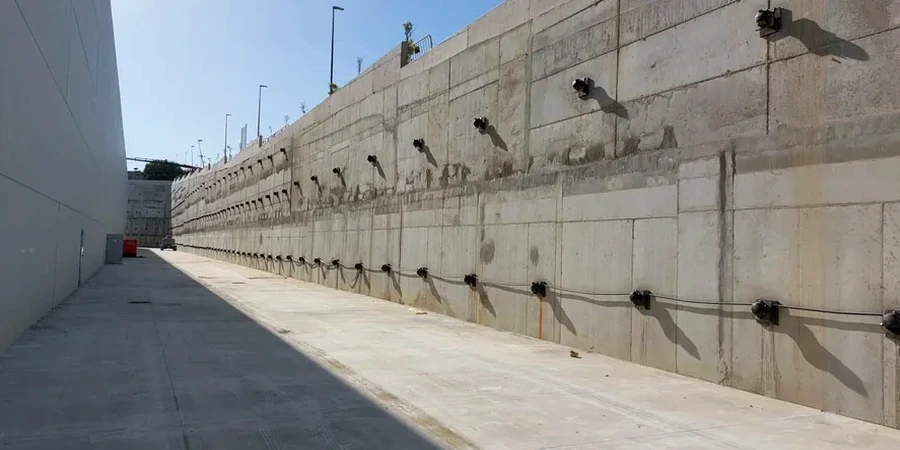
Projects throughout Hialeah that commonly require slope and wall expertise range from commercial developments and residential subdivisions to infrastructure improvements and canal bank stabilization. The design of active/passive anchor systems becomes essential when traditional gravity walls prove insufficient for the lateral earth pressures encountered in deep excavations or when space constraints limit the footprint of the retention system. Similarly, retaining wall design services are fundamental for creating usable level areas on sloping sites, constructing basement walls in commercial buildings, and developing roadway embankments that must maintain stability under traffic loading.
Frequently asked questions
What factors determine whether a slope in Hialeah requires professional stabilization?
Professional evaluation is required when slopes display signs of instability like tension cracks, soil creep, or erosion, or when planned grading surpasses the natural angle of repose for local soils. In Hialeah, the elevated water table and the presence of porous limestone can make even moderate slopes fail without adequate drainage and reinforcement. Any slope with a horizontal-to-vertical ratio greater than 2:1 generally calls for geotechnical assessment.
How does the high water table in Hialeah affect retaining wall design?
The high groundwater conditions in Hialeah create significant hydrostatic pressure behind retaining walls, which must be managed through proper drainage and waterproofing systems. Walls lacking adequate weep holes, gravel backfill, or foundation drains will face much higher lateral loads than those with effective drainage. This typically requires stronger structural sections and deeper embedment to prevent overturning and sliding failures.
What is the difference between active and passive earth pressure in wall design?
Active earth pressure arises when a wall moves slightly away from the retained soil, letting the soil mass expand and use its internal shear strength, leading to the lowest lateral pressure. Passive earth pressure happens when the wall pushes into the soil, compressing it and providing the greatest resistance the soil can offer. Understanding this difference is key to designing efficient retaining structures that leverage soil-structure interaction principles.
When are anchored systems preferred over conventional retaining walls in Hialeah?
Anchored systems are the preferred choice when excavation depths go beyond 15 to 20 feet, when space limitations prevent using wide gravity or cantilever wall bases, or when surrounding structures cannot handle the ground movements from conventional wall construction. In Hialeah's urban areas and along canals, tieback anchors offer needed lateral support while reducing the construction footprint and lowering the chance of undermining nearby foundations.