Hialeah’s transformation from Seminole grazing land into one of Florida’s densest cities happened fast, and the underlying Miami Limestone formation has never quite forgiven the pace. We see it in the way pavements settle around Amelia Earhart Park and along the older corridors of East Hialeah, where the oolite caprock is riddled with dissolution channels that turn a standard flexible pavement section into a long-term drainage puzzle. Our lab team builds every pavement design around the real stratigraphy we encounter during site investigation, because a generic structural number simply does not hold when you are dealing with alternating layers of cemented limestone and loose quartz sand. For projects near the Canal District, we routinely pair the pavement analysis with a CBR road subgrade evaluation to calibrate the resilient modulus against the actual moisture regime, and we cross-check the base course drainage coefficient with in-situ permeability measurements taken at the same boring locations where the limestone is fractured.
In Hialeah, the difference between a 15-year and a 25-year pavement life often comes down to how well the base course drains laterally through fractured limestone.
Scope of work in Hialeah
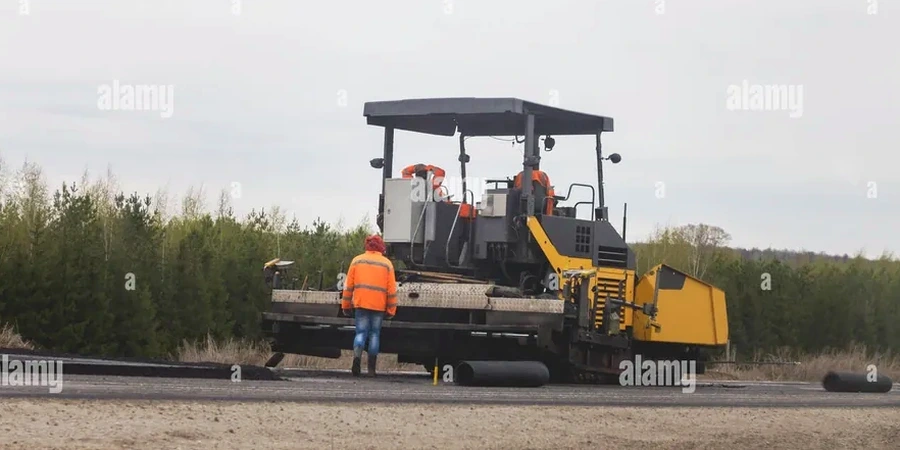
Typical technical challenges in Hialeah
Forensic investigations in Hialeah have repeatedly shown that flexible pavement failure originates at the subgrade-base interface rather than in the asphalt layer, often after a wet season when pore pressure in the limerock base cannot dissipate quickly. East of Palm Avenue, the Miami Limestone is near the surface and heavily fractured, offering excellent structural support but poor subsurface drainage due to unpredictable water movement through rock joints that pond beneath the asphalt and soften the subgrade. West toward the Hialeah Gardens boundary, the limestone deepens and the sand layer thickens, creating a scenario that appears easier to drain but introduces differential settlement at the sand-to-limestone transition within a single pavement section. To address these issues, our designs specify edge drains at closer intervals than FDOT minimums and evaluate drainage coefficient sensitivity across three water-table scenarios instead of one assumed condition.
Our services
Our comprehensive pavement engineering workflow begins with subgrade characterization and ends with a fully detailed layer section specification ready for contractor bidding. Every deliverable includes structural number calculation, drainage coefficient analysis, and asphalt mix design recommendations customized for South Florida's climate.
Flexible Pavement Structural Design
Layer thickness and material specifications are determined using AASHTO 1993 methodology, calibrated with lab-measured resilient modulus values from site-specific subgrade and base samples. This process also incorporates ESAL projections and terminal serviceability analysis.
Subgrade Evaluation and Stabilization
We perform field CBR testing, plate load tests, and laboratory resilient modulus determination on undisturbed Shelby tube samples. When the natural subgrade resilient modulus falls below the design threshold, we provide lime-rock blending or cement-stabilization recommendations.
Pavement Drainage and Life-Cycle Analysis
Our services include permeability testing of base and subgrade materials, calibration of drainage coefficients for Hialeah's wet-season water table, and life-cycle cost comparison between flexible and rigid pavement alternatives over a 30-year analysis period.
Frequently asked questions
How much does a flexible pavement design for a commercial parking lot in Hialeah typically cost?
For a standard commercial parking lot design encompassing subgrade testing, structural number calculation, and full layer specification, the fee ranges from US$1,560 to US$4,510. The exact cost depends on the number of borings required and whether laboratory resilient modulus testing is needed beyond the field CBR evaluation.
Why does the water table matter so much for pavement design in Hialeah?
Because Hialeah is situated on the Biscayne Aquifer, wet-season groundwater can rise to within 18 inches of the pavement subgrade in many areas. When the unbound base course becomes saturated, its modulus drops significantly, and the structural number calculated for dry conditions no longer protects the asphalt layer from fatigue cracking. To prevent this, we run drainage coefficient analysis under multiple saturation scenarios.
Do you use the AASHTO 1993 method or the newer mechanistic-empirical design?
We primarily use the AASHTO 1993 guide as our design framework, as it remains the standard accepted by most South Florida building departments and FDOT for local roads and commercial developments. However, we supplement it with resilient modulus testing and drainage sensitivity analysis incorporating mechanistic principles, resulting in a hybrid approach that is both permit-friendly and technically rigorous.
What thickness of asphalt do you typically recommend for Hialeah’s collector streets?
For a collector street carrying 2 to 5 million ESALs over 20 years, we typically design a hot mix asphalt thickness of 4 to 6 inches over a limerock base of 8 to 10 inches. The exact values depend entirely on the subgrade resilient modulus measured at the site. Near the canal system, we have observed that an additional 2 inches of base course can be the difference between meeting and missing the terminal serviceability target.