Hialeah sits on the Miami Limestone formation, specifically the porous Miami Oolite facies. This rock can have unconfined compressive strengths ranging from 500 to over 2,000 psi, but its vuggy texture creates unpredictable bearing surfaces. A simple presumptive load table won't cut it here. Our lab team has run hundreds of consolidation and strength tests on cores pulled from sites near the Hialeah Park racetrack and along West 49th Street. The data consistently shows that without a targeted shallow foundation design, differential settlement becomes a real risk within the first five years. We cross-check our parameters with in-situ permeability tests to understand how water moves through the oolite and affects long-term soil-structure interaction.
Vuggy Miami Oolite can lose 40% of its lab-tested bearing capacity in situ because of dissolution voids we can't see from the surface.
Scope of work in Hialeah
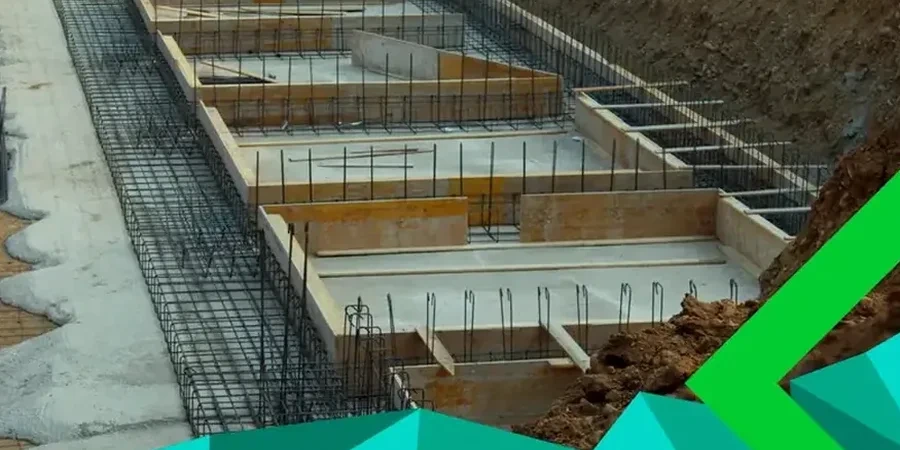
Typical technical challenges in Hialeah
During the framing phase of a six-story residential project on East 4th Avenue, hairline cracks appeared in the ground-floor slab. The initial geotechnical report, which lacked coring, assumed a 12 ksf presumptive bearing value. Our firm was brought in to diagnose the issue. At 30 inches below the footing excavation, our borings uncovered a 4-inch-thick loose silty sand lens that the original test pits had entirely missed. The footings were resting on a material that was not the competent limestone everyone had anticipated. To address the soft lens, we redesigned the footings using a structural fill replacement, which was verified through Proctor tests on the compacted lift. Although this solution cost much less than a full pile retrofit, it caused a three-week delay. This exemplifies the consequences of neglecting a proper shallow foundation design in Hialeah's layered soil profile.
Our services
Our laboratory provides a comprehensive shallow foundation design package that supplies the structural engineer with all necessary information to finalize footing geometry. Beyond a single bearing value, we offer additional critical data.
Bearing Capacity & Settlement Analysis
To compute allowable bearing pressure and total settlement, we integrate rock core strength data (UCS) with RQD logs and fracture spacing measurements. This analysis employs closed-form solutions and, for intricate footing geometries, finite element verification.
Rock Coring & Laboratory Testing
Through the Miami Oolite, we achieve continuous core recovery using HQ or NQ sizes. Testing includes point load index and unconfined compression per ASTM D7012. Each run is meticulously logged for cavities, vugs, and fracturing that may diminish the rock mass modulus.
Construction Subgrade Verification
During excavation, we inspect the bearing surface and run sand cone density tests on any compacted fill replacement to confirm the design assumptions are met before the rebar goes in.
Frequently asked questions
What does a shallow foundation design report include for a Hialeah commercial lot?
Our report includes the net allowable bearing pressure, estimated total and differential settlements, and the modulus of subgrade reaction for slab-on-grade design. It also offers recommendations on minimum embedment depth and subgrade preparation. Attached are core logs, lab test results (including UCS and consolidation data), and a site plan that indicates boring locations in relation to the proposed structure.
How much does a shallow foundation design package cost for a typical project in Hialeah?
For a typical commercial lot that necessitates two borings with coring and lab testing, the package price usually ranges from US$1,750 to US$3,320. The exact cost hinges on the number of borings, the total linear feet of rock coring, and whether extra consolidation tests on interbedded soft layers are required.
How long does it take to get the bearing capacity results after drilling?
You can expect preliminary bearing capacity recommendations within 5 business days after fieldwork completion. The final stamped report, containing all lab test data (UCS and consolidation) and the comprehensive settlement analysis, is provided within 10 to 12 business days following the arrival of the last core sample at the lab.
Can you design a shallow foundation if the rock is deeper than 10 feet?
It depends on the overburden. If the overburden is dense sand with a corrected SPT N-value above 20, a shallow foundation can still work, and we will analyze it as a soil bearing case with settlement checks. If the overburden is loose fill or organic silt, we would not recommend a shallow footing; instead, we would suggest evaluating a ground improvement strategy or a deep foundation to bypass the weak layer and bear on the limestone. More info.