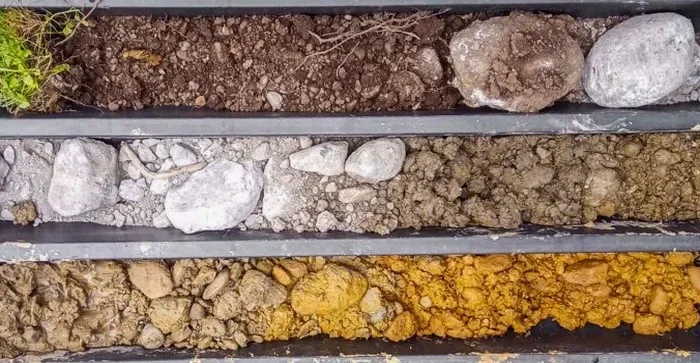
Hialeah’s growth from a marshy fringe near the Everglades into a dense urban core brought foundation challenges that didn’t exist on the prairie a century ago. Early developers filled low areas with variable material, and today that legacy shows up in the top eight to twelve feet of stratigraphy. A test pit lets us see those layers directly instead of interpreting them from a bore log alone. When a project falls within the Miami Limestone belt and overlies organic silts from old sloughs, the test pits we excavate become the fastest way to confirm fill thickness and groundwater behavior. For sites where shallow rock is expected within five feet, we often pair visual inspection with grain-size analysis of the overburden to flag expansive fines before the structural engineer locks in a foundation type.
Standing inside a test pit tells you more about Hialeah’s fill history in ten minutes than a week of desktop review ever will.
Scope of work in Hialeah
Typical technical challenges in Hialeah
In Hialeah, the water table often lies within five feet during the wet season, a depth governed by OSHA Subpart P for all pits exceeding that threshold. Loose sandy fill, prevalent in the city’s older neighborhoods, can cause a collapse within seconds if shoring or benching is absent. The Florida Building Code incorporates ASCE 7 for foundation design; neglecting direct observation when fill thickness is unknown hinders the structural engineer. We have recovered intact coralline limestone blocks from pits where owners believed only loose rubble existed, a discovery that tripled the allowable bearing pressure. Any open pit is logged, photographed, and backfilled on the same day to maintain safety and adhere to the schedule.
Our services
The same team manages the entire field-to-laboratory process for Hialeah test pit investigations, delivering visual logs along with lab results.
Backhoe-Excavated Test Pits
Excavation by machinery extends to 14 feet while a geologist logs continuously following ASTM D2488. Wall photographs are taken, layer thicknesses are measured, and bulk samples are gathered.
Infiltration Rate Measurement
ASTM D3385 double-ring infiltrometer testing, often mandated by Hialeah’s drainage review, is conducted for stormwater exfiltration design.
Bulk Sampling for Laboratory Testing
Each soil horizon yields 50–80 lb samples, which are sent to our lab for Proctor, Atterberg, grain-size, and direct shear tests, all under a single chain of custody.
Groundwater Observation and Monitoring
Upon reaching the pit bottom, we measure the water level instantly; if extended monitoring is required, a standpipe is installed.
Frequently asked questions
How deep can you safely excavate a test pit in Hialeah?
Open ground allows a standard backhoe to reach 12–14 feet. Shoring or benching is mandated by OSHA for depths over 5 feet; in Hialeah summer, the water table is typically 4–8 feet, so dewatering is arranged for deeper excavations.
What does a test pit show that a boring misses?
Lateral visibility is continuous, revealing lenses, fill pockets, roots, debris, and the natural-to-man-made interface. While a split-spoon sample only captures a 2-inch segment, a pit wall displays the entire profile over several feet.
How fast can you mobilize a test pit crew in Hialeah?
After the utility locate ticket is cleared, work typically begins within 48–72 hours. The backhoe, field geologist, and traffic control (when near a public right-of-way) are coordinated.
Do you handle both the excavation and the laboratory testing?
Absolutely. On-site logging by our geologist, bulk sample collection with chain-of-custody, and in-house lab testing (Proctor, Atterberg, grain-size, shear) ensure a single, consistent report.
What is the typical cost range for a test pit in Hialeah?
A single pit logged per ASTM D2488, plus infiltration testing and bulk sampling, typically costs between $510 and $820 USD, with variations based on depth, accessibility, and laboratory scope.