Hialeah sits on a limestone shelf capped with thin organic silts and sandy clays, where the water table can be less than four feet below the surface in western blocks near the canal network. Fine-grained fill from the 1960s and 1970s is common, and its behavior when wet changes drastically. We run Atterberg limits on every sample to flag high-plasticity material before it ends up under a slab. The liquid limit and plastic limit tell us exactly how much water the soil can hold before it turns to soup. For deeper bearing layers, we often pair this test with grain-size distribution to confirm whether the material classifies as CL, CH, or ML under the Unified Soil Classification System. Contractors across Miami-Dade rely on these numbers to pick the right compaction spec and avoid post-construction heave.
A plasticity index above 25 in Hialeah fill means potential swell-shrink cycles that can crack a slab within two wet seasons.
Scope of work in Hialeah
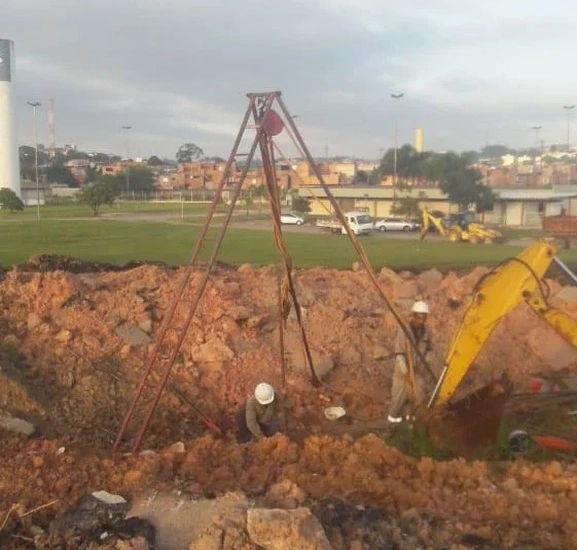
Typical technical challenges in Hialeah
A slab preparation for a warehouse expansion on Okeechobee Road began on what appeared to be clean, sandy fill. Since the material seemed granular, the contractor didn't perform Atterberg limits tests. However, three months after the concrete was poured, the floor panels started to dome at the joints. To investigate, we took cores from six locations, revealing a layer of black organic clay with a liquid limit of 68 and a plasticity index of 42. This clay lens had been drawing moisture from a nearby retention pond, expanding upward with sufficient pressure to raise a 6-inch unreinforced slab. The cost of remediation exceeded the original slab installation. Hialeah contains many similar hidden areas—former marshy depressions that were backfilled years ago and then sealed with a thin layer of limerock base. For such issues, Atterberg limits represent the most affordable early detection method available.
Our services
For Hialeah undertakings where fine-grained soil dictates the design approach, Atterberg limits are only a single element of the classification process. We supplement them with the subsequent tests to furnish the geotechnical engineer with a comprehensive overview.
Full USCS Classification Package
In addition to Atterberg limits, we perform grain-size distribution using a hydrometer. Per ASTM D2487, we provide a full soil classification, which includes the group symbol, group name, and a single-page recap of the engineering characteristics pertinent to your foundation design.
Compaction Correlation Suite
We combine plasticity index and liquid limit with either standard or modified Proctor compaction curves. By relating the optimum moisture content to the plastic limit, we enable the earthwork contractor to achieve density goals while avoiding excessive wetting of the fill.
Frequently asked questions
How much does Atterberg limits testing cost per sample in Hialeah?
For one Atterberg limits test that includes liquid limit, plastic limit, and plasticity index, the cost ranges from US$70 to US$100 per sample. If ten or more samples are submitted, volume pricing applies. Additionally, we offer a bundle with a full mechanical sieve at a lower combined rate.
How long does the test take from sample drop-off to report?
The typical turnaround time is one business day. For samples arriving at our Hialeah lab before 9 a.m., we are frequently able to email the report that same afternoon. However, since the multipoint liquid limit method involves incremental hydration and a minimum of three cup runs, the feasibility of same-day service hinges on the drying curve of the material.
Do you pick up Shelby tubes from Hialeah job sites?
That's correct. We operate a courier route through Hialeah, Miami Lakes, and Medley two times daily. Moreover, field personnel can deliver thin-wall tubes and split-spoon liners straight to our receiving window located on West 20th Avenue.
What’s the minimum sample size needed for Atterberg limits?
Approximately 300 grams of material that passes through a No. 40 sieve is required. In a standard Shelby tube, the uppermost six inches generally contain sufficient fines. For sandy soils, it may be necessary to use the entire tube to gather an adequate minus-425-micron portion.